
The short answer
The King’s Code is a daily self-talk and planning practice delivered through a simple app. Instead of repeating affirmations your mind argues with (“I am wealthy”), it helps you write a short personal code — specific, believable lines tied to one action you can take today — and practice it for about 15 minutes a day across four phases: Reset, Syntax, Mirror and Anchor. Your lines rotate every 14 days, a tracker shows your streak, and four printable bonuses are included. In 2026 it costs $97, one payment, with no monthly fee, and comes with a 30-day money-back guarantee. It is a practice tool, not a treatment and not an income program.
You know the moment. You stand in front of the mirror, say “I am confident” out loud, and a quieter voice behind your eyes answers: no, you’re not. Most people conclude they did it wrong, or that affirmations just don’t work for them. The King’s Code starts from a different explanation — one that was published in a peer-reviewed psychology journal more than fifteen years ago — and builds a practice around it.
Below you will find how the practice works phase by phase, what is actually included, the real 2026 checkout price, the guarantee terms and — just as important — who should skip it. For the full breakdown with our scorecard, read our complete King’s Code review.
Why your mind argues back (the research behind it)
The maker builds the practice around three published findings, and is unusually open about them — every study is linked from the official page and explained in the included Science Primer:
- Affirmations can backfire. In a 2009 experiment led by psychologist Joanne Wood at the University of Waterloo, people repeated “I’m a lovable person.” Those with high self-esteem got a small lift; those with low self-esteem — the people who want affirmations most — ended up feeling worse. The researchers’ explanation: when a statement sits too far from what you currently believe, the mind rejects it and argues back.
- If-then plans help people follow through. Peter Gollwitzer’s work on “implementation intentions” (specific plans like “When I sit down at my desk, I’ll send one proposal”) was summarized in a 2006 analysis of 94 independent tests, which found these plans helped people act on their goals more than intentions alone.
- Talking to yourself by name works better than “I”. A 2014 study led by Ethan Kross at the University of Michigan found that people who prepared for a stressful speech using their own name and “you” were rated by independent observers as performing better.
To be clear, and the maker says this itself: none of these studies tested The King’s Code. They are the principles the practice was built around. The app has not been tested in a clinical study. We unpack the studies in plain language in why affirmations don’t work for so many people.
A wish versus a decree: what a “code” actually is
A wish says, “I hope things change.” A decree says, “This is how things are done here, starting today.” A king doesn’t stand in front of a mirror hoping to feel like a king — he lives by a code: a short set of rules about what he does, how he speaks, and what he no longer tolerates. That is the whole idea. Each line of your code is written to be specific and believable, so the inner critic has far less to push against:
Notice what changed. Each line describes who you are becoming through an action you can take today. That is the difference between something your mind rejects and something it can actually work with.
How The King’s Code works: four phases, about 15 minutes
Every day the app walks you through four short phases — three in the morning, one before bed. Nothing to design from scratch: open the app, tap play, follow along.
- Reset · 2 minutesA guided breathing session to slow down before you practice, so you start somewhere other than your inbox.
- Syntax · 5 minutesThis is where your code gets written. The app asks about your goal, then helps you shape each line so it is specific, believable, and tied to one action you can take today.
- Mirror · 5 minutesStand in front of any mirror and read your code aloud, using your own name. The first few days often feel awkward — the maker says so openly, and the included Mirror Starter Guide exists for exactly that.
- Anchor · 3 minutesBefore sleep, three short prompts: Where did I live by my code today? Where did I slip? What is tomorrow’s one action? An old habit — the Stoic philosopher Seneca described reviewing each day before sleep nearly two thousand years ago.
Your code lines rotate every 14 days to keep the practice fresh, and a simple tracker shows your streak.


What makes it different from a generic affirmation app
- It writes the lines with you — a short setup asks about your goal and routine, and the app builds your first code from your answers. You are not staring at a blank page.
- Specific and believable by design — every line is tied to one action you can take today, which is the whole point of the research above.
- Four buttons, one for each phase — tap play and follow along. No settings maze, no feed, no community to scroll.
- A 90-day structure — lines rotate every 14 days, and the program is built to run for 90 days, with a streak tracker and a printable calendar.
- Honest about what it is — the maker states plainly that it is a practice tool, not a treatment for any mental health condition and not a way to make money.
- One payment — no subscription, no monthly fee, no automatic renewal, confirmed at the checkout.
What you get: the app plus four bonuses
Everything below is included in the single $97 purchase:
The King’s Code App
Four buttons, one for each phase. A short setup builds your first code from your answers; lines rotate every 14 days; a simple tracker shows your streak.
The Code Journal
Printable PDF with 90 daily pages for writing your code by hand — for anyone who prefers pen and paper to typing.
The Science Primer
12 five-minute lessons explaining the research behind each phase in plain English, with links to the original published studies.
The Mirror Starter Guide
A short guide to getting through the awkward first two weeks of mirror practice, including what to do when it feels ridiculous.
The 90-Day Practice Tracker
A printable one-page calendar to check off each day you complete all four phases.
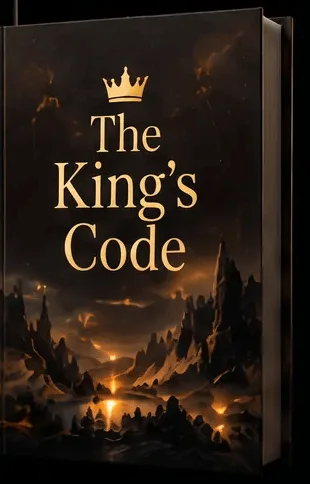
The King’s Code price: today’s checkout price
There is exactly one option, and we verified it at the official JVZoo checkout:
| What | Included | Price (USD) | Billing |
|---|---|---|---|
| The King’s Code Everything | App + Code Journal + Science Primer + Mirror Starter Guide + 90-Day Tracker | $97 | One payment |
Price in US dollars (USD), captured at the official checkout. After checkout the maker offers an optional Stoic-philosophy companion add-on; it is separate, and you can simply decline it — the $97 purchase already includes the app and all four bonuses.
30-day money-back guarantee
Try the practice for up to 30 days. If you are not satisfied for any reason, email support@usethekingscode.com within 30 days of purchase and you will receive a full refund.
What to honestly expect
The King’s Code is a practice tool. Like any habit, what you get from it depends on how consistently you use it and what you do with the rest of your day. The maker points to one well-known habit study: among participants who formed a new daily habit, it took a median of 66 days for the behavior to feel automatic, with individual estimates ranging from 18 to 254 days. That is why the program runs for 90 days, and why the first two weeks of mirror practice get their own guide. If you are looking for a change you will feel after one session, this is not that. We explain that study in how long it really takes to form a habit.
Who it’s for — and who should skip it
A sensible fit if you…
- Have tried affirmations, journaling or visualization and felt that inner voice push back
- Want a short, structured routine you can actually keep — about 15 minutes a day
- Like that each line ends in one concrete action for today, not a vague feeling
- Prefer one payment over yet another monthly app subscription
- Want a 30-day window to test it with nothing to lose
Skip it if you…
- Won’t show up for about 15 minutes a day — the practice only works if you do it
- Won’t follow the method to the letter, every single day — skipping phases or days is what breaks it
Frequently asked questions
What is The King’s Code?
A structured self-talk and daily planning practice delivered through a simple app. Each day it guides you through four short phases — Reset (breathing), Syntax (writing your personal code), Mirror (reading it aloud using your own name) and Anchor (an evening review) — for about 15 minutes in total. It comes with four printable bonuses.
How much does The King’s Code cost in 2026?
$97, one payment, verified at the official JVZoo checkout. There is no subscription, no monthly fee and no automatic renewal. The price includes the app and all four bonuses. An optional add-on is offered after checkout and can be declined.
Do I need to believe in manifestation or the law of attraction?
No. The King’s Code is a structured self-talk and daily planning practice. You don’t need any particular belief to follow it.
How much time does it take?
About 15 minutes a day: around 12 minutes in the morning (Reset, Syntax, Mirror) and 3 minutes before bed (Anchor).
How do refunds work?
Email support@usethekingscode.com within 30 days of purchase and you will receive a full refund, for any reason. The guarantee is published on the official page.
From the blog
Why affirmations don’t work for so many people — and what the research says to do instead
The 2009 study that found positive self-statements can backfire, why the mind argues back, and the three evidence-based ingredients of self-talk that actually lands.
Read the article →Affirmations vs. implementation intentions vs. a personal code: which one actually changes behavior?
Three approaches to the same goal, what the research says about each, and an honest decision rule for picking the one that fits you.
Read the article →How long does it really take to form a habit? What the 66-day study actually says
The famous number, the 18-to-254-day range behind it, why missing a day doesn’t reset you, and what it means for a 15-minute daily practice.
Read the article →The King’s Code Review 2026: is the 15-minute daily practice worth $97?
Our full editorial review: how we evaluated it, each phase in depth, scorecard, pros and cons, checkout terms and our 4.8/5 verdict.
Read the review →